
Our approach
Evidence before development.
Every opportunity begins with understanding the material, the available information and the commercial objective. Assessment should establish what is known, what remains uncertain and what further work is justified.
Three stages
From information to decision
- 1
Understand the opportunity
Review geological reports, maps, previous investigations, relevant rights and site conditions. Identify reliable findings and define the purpose of any further assessment.
- 2
Assess and test the material
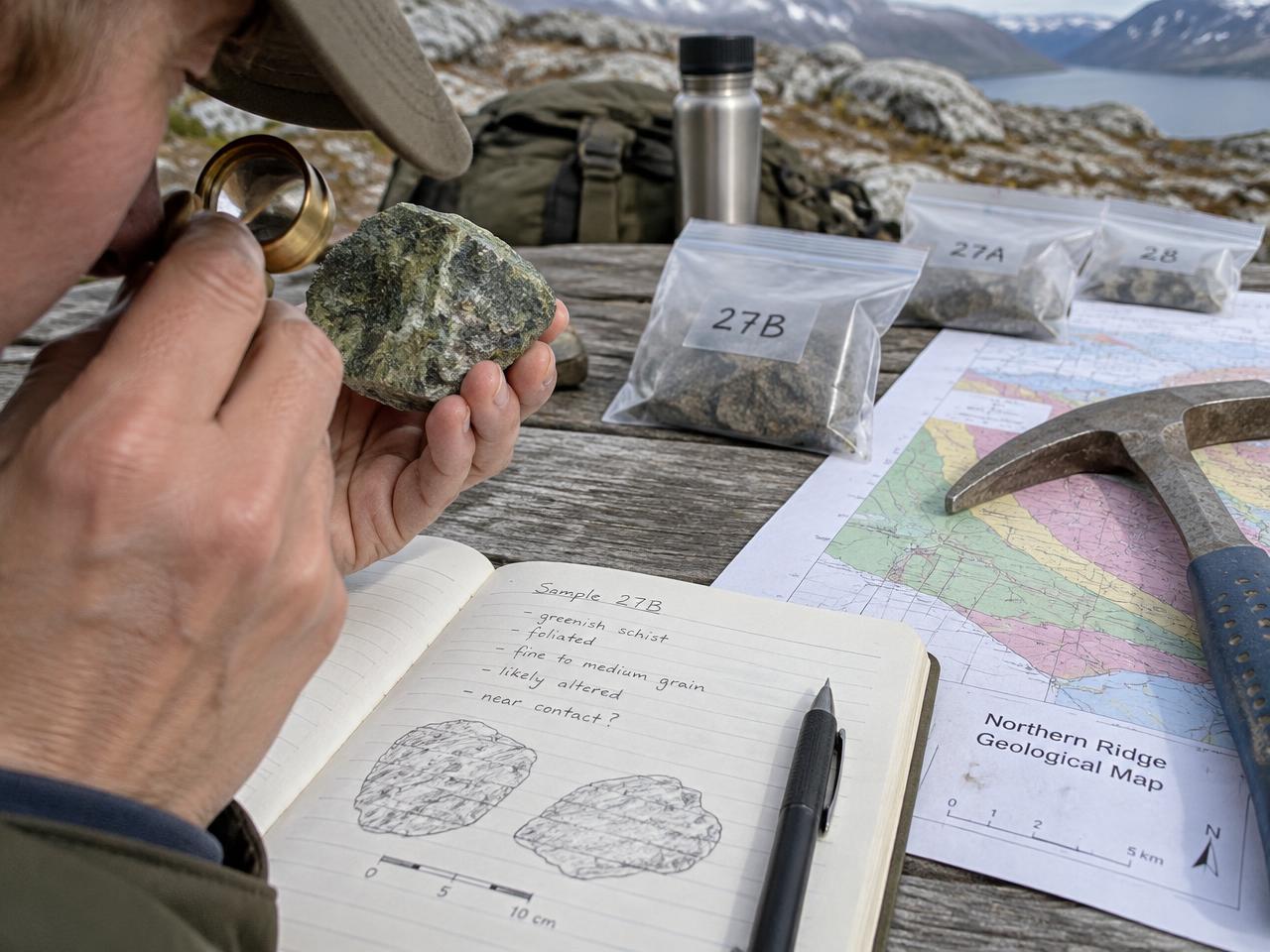
Use appropriate fieldwork, mapping, representative sampling and laboratory testing. Material trials should assess recovery, yield, finish, damage and repeatability where relevant. Methods must suit the mineral.
- 3
Evaluate the development route
Consider technical findings alongside extraction conditions, infrastructure, logistics, costs and buyer requirements. Further development depends on adequate evidence, suitable mineral access, required approvals and technical and commercial feasibility.
How we work
Four working principles
Appropriate technology
Select equipment and methods against demonstrated material requirements.
Traceable information
Maintain clear sample identification, location records and supporting technical documentation.
Relevant expertise
Engage qualified professionals whose experience matches the work.
Defined responsibilities
Agree the scope, deliverables and basis for cooperation before an engagement proceeds.
No single extraction method or processing sequence applies to every mineral. Decisions should follow the evidence.
A clear basis for cooperation.
We welcome introductions from mineral owners, lease holders, buyers, equipment suppliers and technical professionals.
Start a conversation